A Good Situation Gives Players 3 Honest Choices

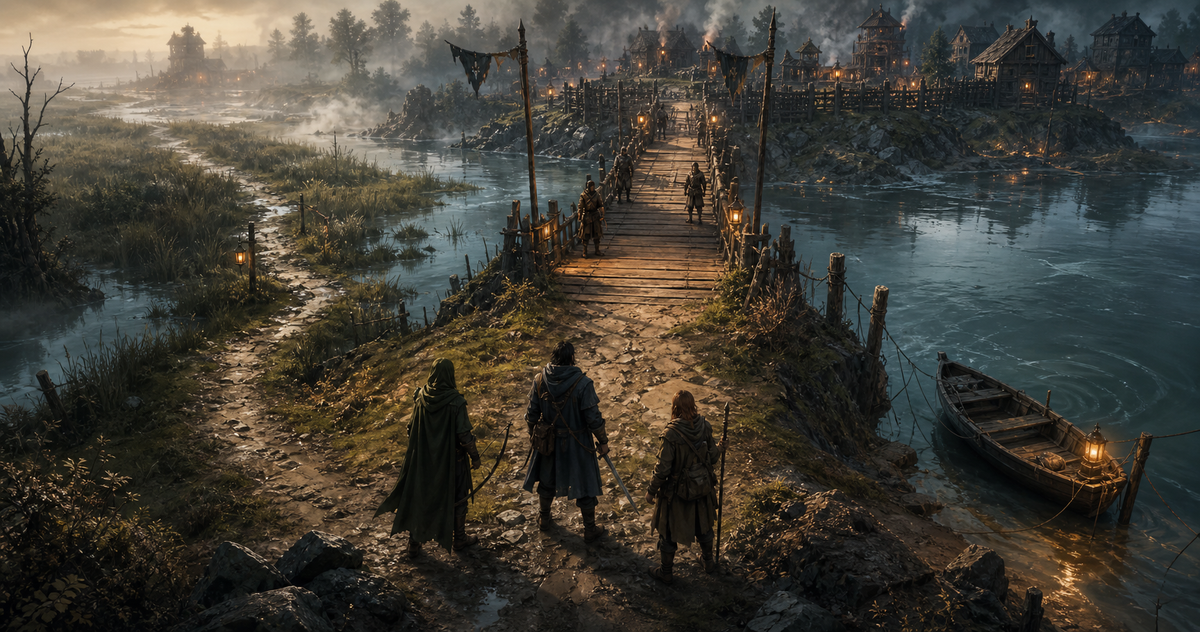
If a scene only works when the players pick the one correct answer, it is not really a situation. A usable situation gives them a few honest choices, lets each choice matter, and then their choice plays out at the table.
One of the easiest ways I know to test whether I have prepped a real situation or just a disguised (railroad) plot is this:
Can the players make at least three honest choices here?
Not fake choices. Not three versions of "walk through the same door." I mean three choices that feel meaningfully different from each other and create different consequences. Avoid the dishonesty of choosing between 3 doors colored red, blue and green but no matter their choice there is always going to be an Ogre hiding on the other side.
Can they confront the problem head on?
Can they go around it?
Can they touch some other part of the situation and make the problem change shape or outcome?
If the answer is no, I usually do not have a situation yet. I have an answer key.
And checking off a list of answer keys is not only boring to run but becomes obvious to the players that their agency and choices don't mean anything.
The checklist is a railroad and make the GM guard the "real" path. They make every weird player idea feel like a threat to the prep.
That is the opposite of what I want.
I want players to look at a problem and feel motion, to feel the urge to make a creative choice and solve the problem from a different approach.
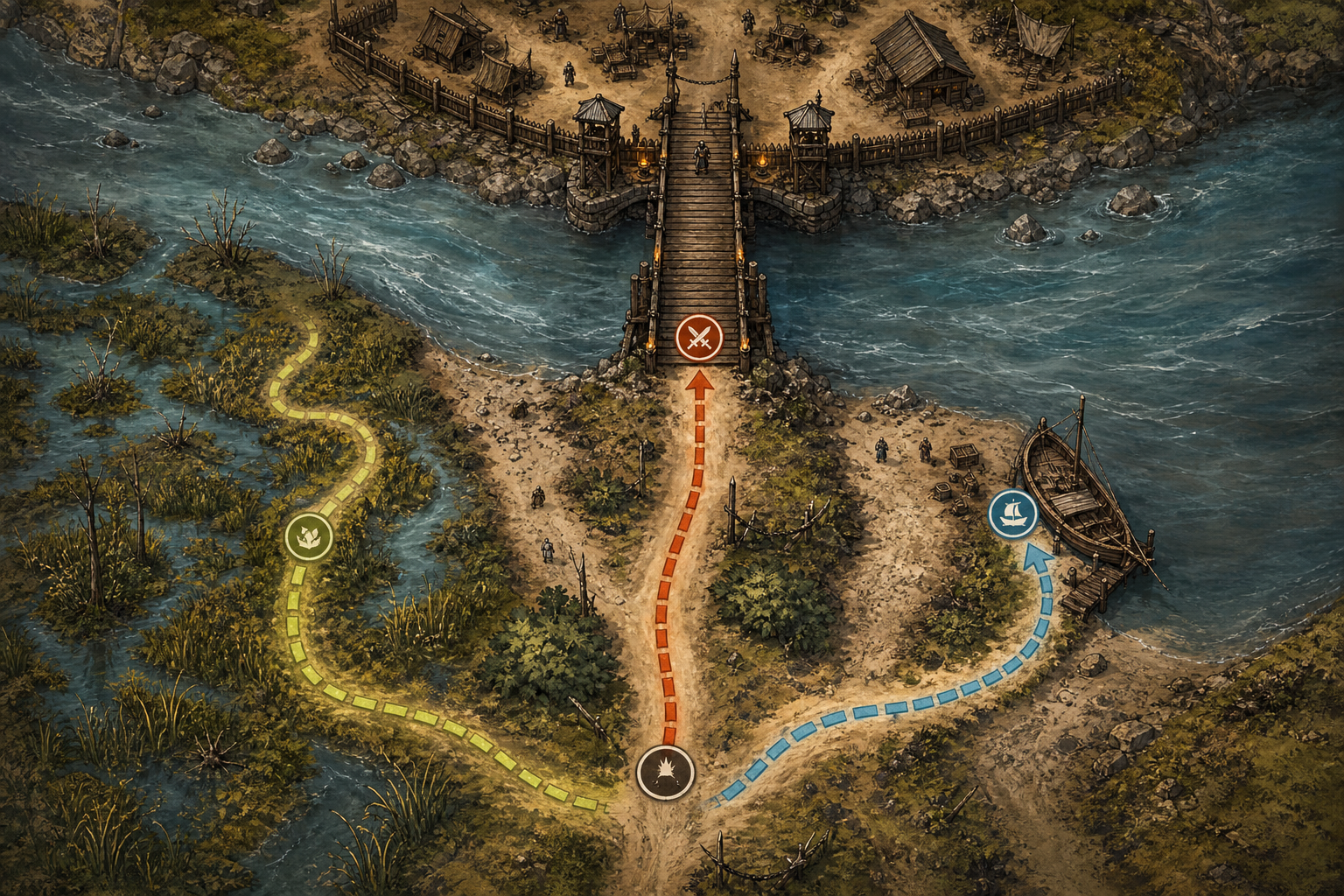
Maybe the guard captain can be bribed, challenged, or embarrassed in public.
Maybe the haunted bridge can be crossed, cleansed, or bypassed through the dangerous marsh.
Maybe the tavern feud can be calmed, exploited, or redirected toward the local tax collector who quietly caused half the mess in the first place.
Those are not three branches of a plot tree. They are three honest ways for the players to influence and shape a scene or event because their choices will alter and influence the outcome.
Pressures and Choices
Player choice matters because once the players can touch a situation from different angles, the GM no longer has to protect a sequence. We just have to understand the pressures well enough to react.
Who wants what?
What gets worse if nobody acts?
What becomes visible when the players push here instead of there?
That is where emergent play starts feeling alive. Not because the GM invented a shocking twist. Because the table can create different futures from the same starting conditions.
This is also why I keep talking about visible consequences.
If one choice angers the guards, show it.
If one choice buys time but worsens the flood, show it.
If one choice earns an ally but creates a debt, show it.
The players do not need perfect information. But they do need the world to answer them clearly enough that future choices feel earned.
That is the whole game, really.
Not "did they find the intended route."
More like: "what did their approach wake up?"
When prep is built this way, I find I need less of it, not more. I do not need six pages explaining the correct order of events. I need the current pressure, the unstable pieces, and a decent sense of what happens if the players push on one side instead of another.
That is what makes a map runnable. Again, I do not only mean literal maps. I mean any prep surface that lets you see the live situation and make the next consequence obvious.
If you are building adventures, encounters, towns, factions, mysteries, traps, or even solo prompts, this is a useful question to steal:
What are the three honest choices here?
You do not have to lock them in forever. The players will invent a fourth one anyway, and honestly that is part of the fun. But if you can see at least three real approaches, you are usually in much better shape to run the thing without wrestling your own prep.
That is when the table starts feeling less like a puzzle box and more like a world.
Practical GM Takeaway
Before your next session, take one location, problem, or faction conflict and write down three honest player approaches to it. Then add one likely visible consequence for each approach. That single step usually reveals whether you have a runnable situation or just a hidden script.