Are You Making Historical Notes or Aftermath Notes?

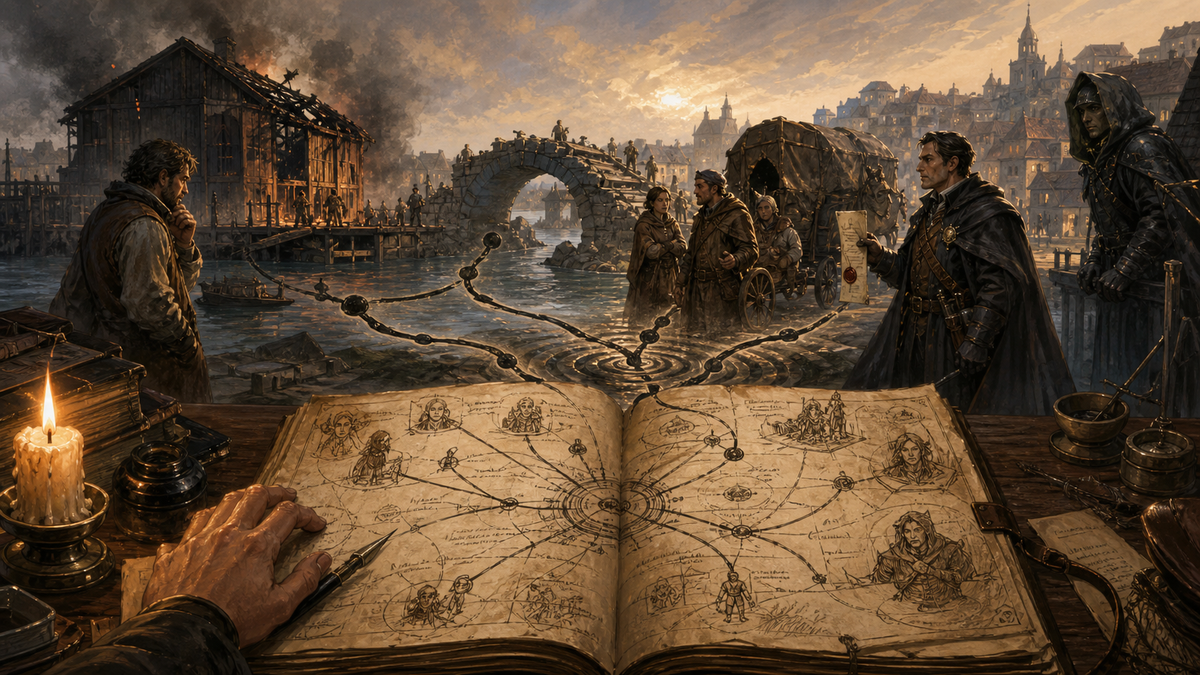
Do you make notes at the end of a session or the end of an adventure?
If done properly, your notes could easily set you up for your next adventuring session by placing a variety of pressures on the party forcing them to make decisions and giving the Game Master an easier path to handling the next session.
Most Game Masters that make notes about the aftermath of a party's actions are typically recording an historical event, but that only preserves continuity.
That does not help to set the GM up for the next continuing session or to drive the next adventure and it certainly does not help shorten your prep time for the next adventure.
Historical notes are too passive. They help the GM remember what happened and that is a good thing but an adventuring party usually has left a lot of turmoil and sometimes destruction in their wake of solving a problem.
Rarely does the adventuring party leave the area better than they found it with everything neatly tied up in a pretty bow and all concerned parties happy.
Historical Notes:
Historical Notes remember names, preserve details, tell you which warehouse burned down, which bridge collapsed, which priest is a liar, where the dragon eggs are stored.
All useful details but the GM has only preserved what has happened.
Now when you come back for the next session you check your historical notes for names, trying to remember what matters going forward, what pressures and actions should show up first.
Historical Notes definitely help with memory but they do not reduce the next decision or help you prep for the next session.
Them's Fightin' Words:
Your Historical Notes did not start an argument.
Not necessarily a verbal fight, but a conflict of interests, growing pressures, problems that now exists because the players put their mark on the world.
The Historical Notes tell you the warehouse burned down. But what else happened during or after the fire?
The Aftermath Notes should tell you, Is there a formal ongoing investigation into the culprits? Were there any casualties or families of any victims? Did the fire burn any other buildings or damage important products?
The Historical Notes tell you the bridge collapsed. But what else has happened because of this action?
Aftermath Notes should tell you, Who is blaming whom? What route or trade has been disrupted? Who is paying for repairs to an expensive bridge? What important messages will be delayed?
The Historical Notes tell you a lying priest was exposed. But what else has happened because of this action?
The Aftermath Notes should tell you, Is the whole church corrupt? Will the local citizens continue to trust the other priests? If trust in the church collapses who fills the vacuum?
This is where the notes become playable, setting you up for what has changed in the world. It stops being an historical archive and becomes the next scene already plotted out for the next session.
The Aftermath Notes become more powerful because they are "what changed?" and that is stronger than Historical Notes of "what happened?".
Conflict
Do you know what is even better than "what changed?".
Who is now in conflict because of that change?
That can be your next session opener. The table needs a changed situation.
Who has a stake in the changed situation? What machinations are they getting up to before the party sits down for the next adventure?
The players left a mark on the world and now the world is responding.
The Aftermath Notes can help with cognitive load and making decisions about where the world is headed because the GM made an effort to record directional information and goes into the next session with momentum.
A world that noticed is historical trivia. A world that reacts is pressure.
"The innkeeper heard what happened at the bridge" is not an action, that is an historical news event that happened in his village.
The innkeeper doubles stable and menu prices because route merchants are stranded (and blame the party by name) is a direct consequence of the players actions.
That is direction that can be played and creates an argument and that argument is a great session starter.
What is fun is when these consequences begin to layer onto the adventuring party while they are still trying to fulfill their original mission. This make emergent gameplay deep and rich.
Consequence Nodes:
A consequence node is when the players performed a pivotal action in the adventure. This action doesn't have to be large and dramatic like a burning warehouse or a destroyed bridge. It could be an intercepted message or publicly revealing a lying priest.
To create an Aftermath Note pick several important Consequence Nodes that the players created and ask one extra question.
What dispute does this create? If no dispute is created then move on, but if the question creates a Claimant (someone or some group that has a say or is greatly affected) then give the dispute a deadline (to make the world move forward) and a cost spike (the cost does not have to be monetary but typically is, other costs can include manpower and time).
One scenario has the adventuring players skulking around a warehouse and were discovered. During a fight with some warehouse employees a lantern tipped over and started a fire that quickly grew out of control.
Now ask, what dispute does this create? The claimant could be the local thieves guild lost their method of hiding stolen goods. The deadline is they have a week to replace goods they contracted to deliver and have already been paid half of the agreed price.
Now they want to discover who caused them this problem and expense.
The thieves are out the original expenses to acquire the goods in the first place and now they must rush and probably incur additional expenses to replace the goods to meet their contract. Now the deal has become unprofitable for them.
Did anyone perish in the fire? Was it just innocent warehouse employees or members of the thieves guild? People perished and even though they may have been thieves the guild may want to exact revenge for their deaths, or a dock workers guild or family member may become obsessed with bringing the perpetrators to justice.
A second scenario could be that no-one died in the warehouse but now the thieves have to spend time and money finding a new transfer route and storage method and have lost profitable goods meaning the leader of the thieves guild cannot make his debt payment that is due in 4 days. The leader now has 4 days to find the responsible party and make them pay.
A third scenario could be the warehouse owner had no insurance, is now broke with debts to pay and no source of income with numerous businesses asking for compensation for the goods they had stored in the warehouse when it burned down. What choices will he make for his own dire situation?
For a fourth scenario the warehouse is a front for a prince or lord running a sham import business using the royal stamp, who is now at risk of having the illegal enterprise being revealed.
In any of the scenarios, if the party hasn't been hiding their interest in the warehouse and was asking questions around town, there are locals who could identify a member of the adventuring party.
And remember, none of these Consequence Nodes had anything to do with the original reason why the adventuring party was investigating the warehouse.
This is just a Consequence Node for your next session that is rippling out like a pebble in a pond because of the actions of the party.
Even Consequence Nodes that take place in the wilderness or in a dungeon crawl can impact the local area or a broad expanse of territory.
All these wonderful pressures occur because the adventurers wanted to make their mark on the world and the world is letting them know, it not only noticed, it is reacting.
So the next time you make end of session notes, try to make them Aftermath Notes.