Have Theater Kids Ruined TTRPGs? No. But GMs Have A New Problem

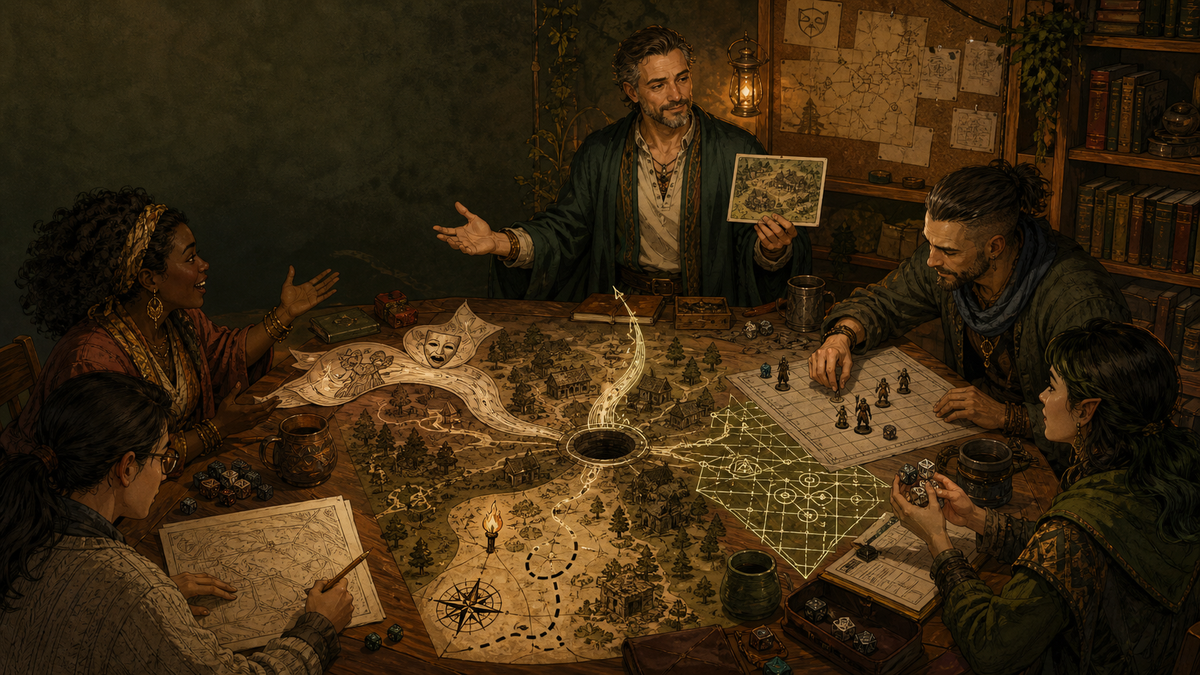
Theater performance and high production values did not ruin the hobby, in fact, they helped expand the audience. Brought more players and GMs into the arena.
What might ruin the game for a new player to a new group? Invisible expectations. The real problem is assuming every player means the same thing by a "good game".
Everyone can arrive carrying the same rulebook but their expectations could mean they each play wanting 3 different games.
Theater kids helped make the hobby more visible, more welcoming to people who enjoy character work, and more comfortable with the idea that a dramatic scene can matter as much as winning a fight. They did not invent bad table habits, and they did not erase every other way to play.
But the joke title is pointing at a real friction point: Due to millions of people watching "Actual Play", a lot of people now sit down at the same game expecting very different things from it.
One player wants to speak in character, make a bad decision because it fits the role, and find out what the relationship scene does to the campaign. A second player wants careful exploration, player skill, strange clues, and the satisfaction of surviving a place that does not care about their backstory. A third player wants tight tactical play, rules mastery, hard-won positioning, and a combat encounter that rewards a plan. A fourth person wants to hang out with friends and roll dice without being asked to perform or memorize the grappling rules.
None of those people are doing TTRPGs wrong. The trouble begins when everyone assumes their method of play is the default.
The Hobby Got Bigger, Not Worse
Video titles want to turn the conversation around TTRPGs into a fake war: old school versus narrative, rules versus roleplay, theater kids versus grognards, actual play versus "real" games.
As I set these words out, I have played for 46 years. The hobby has always had different tables. Even my own table has morphed over the years.
Long before streamed campaigns, some groups used voices and prophecies, some used graph boards, miniatures and ten-foot poles, some argued over alignment rules, and some just wanted to see what happened when a wizard bought a tavern.
The difference over the past few years is, visibility. 40 years ago, new players would arrive at the game with no preconceived notions other than the description a friend had tried to convey to them about how the game was played.
More people can now see highly performed games. More people can find systems built around emotional arcs, tactical coordination, horror investigation, solo journaling, domain management, dungeon survival, or comedy. More people can arrive at a table with a strong picture of what play looks like before they pick up their first die and roll up their first character.
That variety is a win. A player who does not want to act can find a game that respects that. A player who wants the story to care about their character can find a game that supports that. A GM who has been running dungeon expeditions for forty years can still run them without apologizing for not staging a prestige television finale every session.
There is a cost to that variety though. A friend or a GM can no longer simply say, "we are playing a TTRPG, want to join?"
Three Tables Can Share a Rulebook and Still Play Different Games
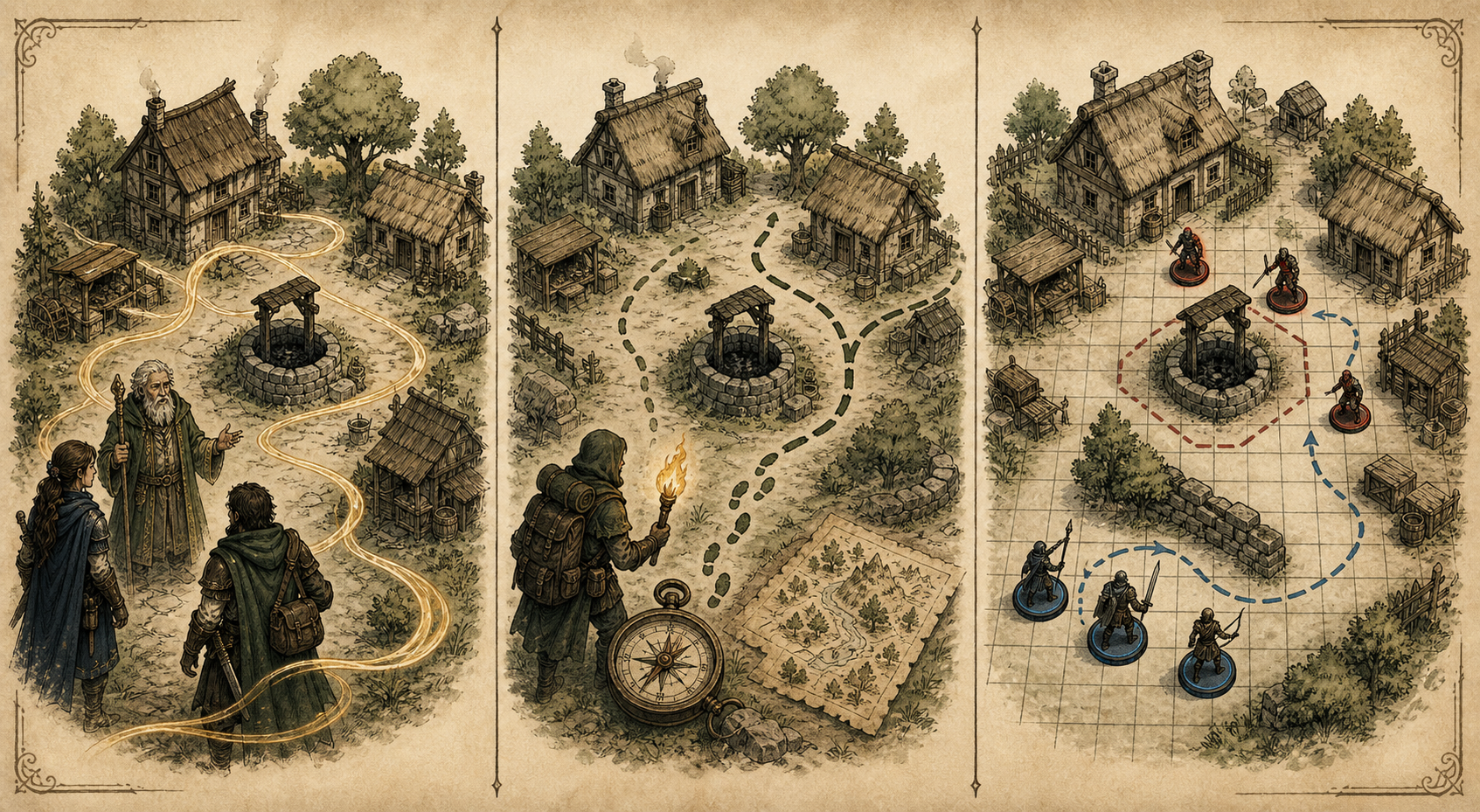
Consider three versions of the same opening:
The party reaches a village whose well has turned black.
A narrative-forward table requires a deeper understanding of the NPCs, the question may be: who in the village does your character feel responsible for, and what promise will you make before you know whether you can keep it?
At an old-school exploration table, the question may be: what changed in the water, what evidence can you gather safely, where does it lead, and how much daylight remains before the villagers turn desperate?
At a tactical or mechanical table, the question may be: what threat is contaminating the well, what resources are available, how does the terrain shape the coming fight, and what preparations give the group the best odds?
All three can be excellent. All three can use the same village, well, map, and monster. The difference is what the GM puts first and what the players understand they are being asked to do.
Problems start when the GM prepares a dangerous puzzle location, one player expects a scene about their family curse, another expects a fair tactical encounter, and nobody has said which pressures are real. The player who avoids the baited door may feel clever. The player who expected the villain to care about their speech may feel ignored. The player who built for combat may feel like their character is being punished for wanting the rules to matter.
That is not a failure of theater kids. It is a failure to make the expectations of the game's promise visible to the players before the game begins.
The Experienced GM Has a Different Problem Now
Some GMs, like me, have been running games for forty or fifty years. We carry a deep practical sense of pacing, danger, table rhythm, and what a session can do without a screenplay and stagehands. That experience is valuable.
It also means our biased defaults may be invisible to newer players.
An experienced GM may think it is obvious that the dungeon does not adjust to the party's level, that a missed clue can simply be missed, that an NPC can refuse a plan, or that a character death is on the table. A newer player may have learned from games where the GM regularly frames scenes around each character, failure moves the story sideways instead of stopping it, and the campaign expects everyone to contribute to its emotional arc.
The burden should not fall only on the GM. Players need to say what they enjoy and what they do not want to be asked to do. Maybe the GM can accept the fact that they may need to shift how they play a little bit.
Ultimately, the GM is the person presenting the world, choosing the pressure, and interpreting the rules in motion. That gives them the clearest opportunity to state the table's actual promise.
The GM does not need to produce a ten-page social contract, just a clear invitation and maybe an elevator pitch about how they run their game play.
Say What the Game Feels Like Before the First Door is Opened
Before a new player starts, a new campaign, or before a new arc, tell the group a few practical truths.
What is play mostly about? Exploration? Character relationships? Tactical missions? Faction politics? Survival? A mixture, but with one or two priorities named.
What happens when plans fail? Does failure cost time and resources? Does it create a new complication? Can the party lose access to content? Is death possible? Is capture possible? Say it plainly.
How much performance is wanted? In-character speech can be welcome without being required. A player can say, "My ranger tries to calm the crowd by reminding them of the flood," instead of delivering it in speech form. Both are roleplaying.
How much rules attention is wanted? Is this a table where careful positioning and system knowledge will regularly matter? Is the GM likely to make a quick ruling and keep moving? Are players expected to track their own options?
What does the world do when players wait? Does the dungeon restock? Do factions act? Are deadlines visible? Is the campaign a sandbox with consequences, a story with chapters, or a hybrid?
These are not restrictions on fun. They let a player decide how to engage instead of trying to read the GM's mind.
Use a Table Trailer, Not a Lecture
My preferred way to do this is a short table trailer: three or four sentences that describe the campaign like an invitation, followed by a few bullet-point truths.
For Example:
This is a dangerous frontier campaign about routes, debts, and towns that need help for inconvenient reasons. The map is open, but the world moves when you delay. Negotiation can solve problems, combat is serious, and nobody has to perform in character. You will usually know the cost of a route before choosing it, but you will not always know who benefits from that cost.
Then add the practical bullets: character death is possible; clues point to places rather than one required answer; the group can retreat; the GM will call for a pause if the tone drifts; tactical rules matter during conflict, but a smart fictional plan can change the situation before the fight.
That short statement does more for a session than a hundred pages of setting history. It tells everyone what kind of choices are available to the player.
The Point Is Not to Police Fun
The game can have more than one mode. Game play can slide up and down the scales of acting, exploration, narrative, tactical.
Some people will always prefer a well-delivered monologue. Some will always prefer a careful map and a risky plan. Some want both, depending on the night.
The fix is not to declare one superior. The fix is to stop making players guess which table they have joined.
Theater kids did not ruin TTRPGs. Actual play did not ruin TTRPGs. Longtime GMs did not ruin TTRPGs. Rules fans did not ruin TTRPGs.
Invisible expectations ruin more sessions than any of them.
Say what your game rewards. Say what it asks of players. Make the pressure visible. Then let people choose whether they want to open that door.